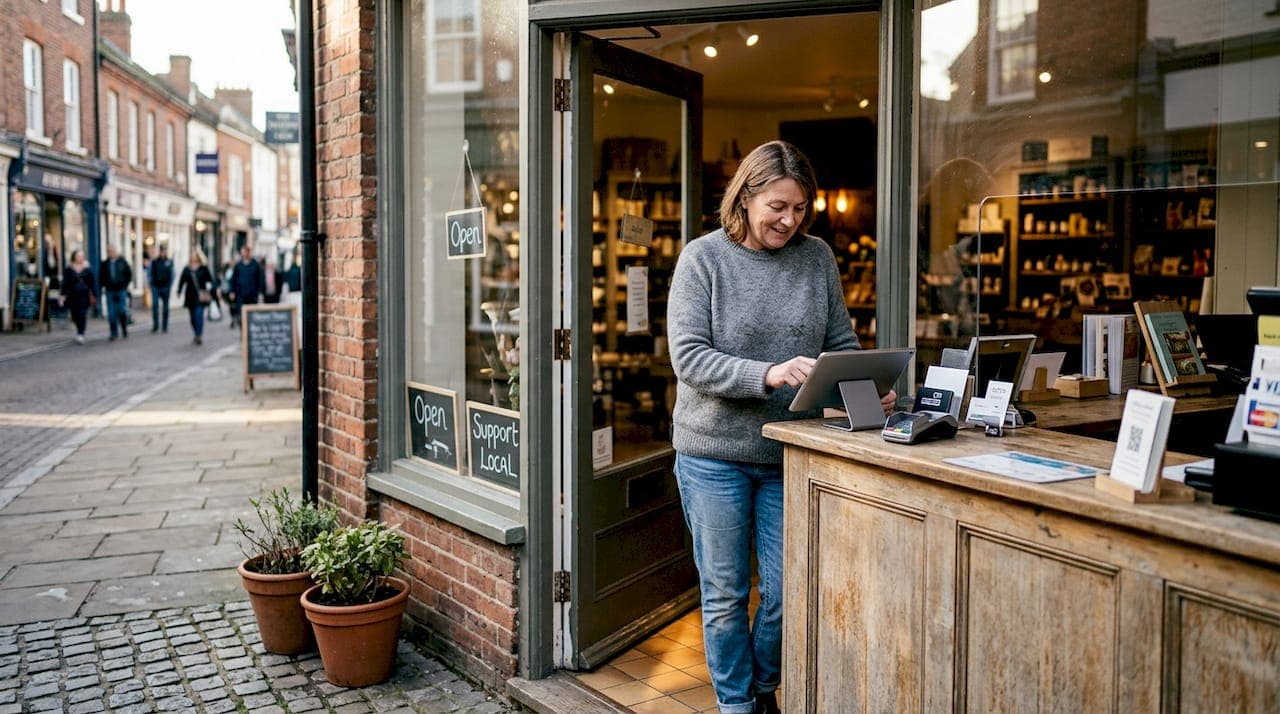
Nearly half of every search made on Google carries a local intent, meaning people are actively looking for businesses, services, or products near them. Yet most UK small business owners still think SEO is something reserved for large e-commerce brands or national chains. It isn't. If you run a plumbing company in Leeds, a café in Bristol, or a beauty salon in Manchester, local SEO is one of the most direct routes to new customers you have available. This guide explains what local SEO actually is, how it works in practice, and the steps you can take right now to start showing up where your customers are already searching.
Table of Contents
- What is local SEO and why does it matter?
- How local SEO works: Key elements and the Local Pack
- Essential local SEO strategies for UK small businesses
- Measuring local SEO success and next steps
- Why most local SEO advice misses the mark for UK businesses
- Get expert support to grow your local presence
- Frequently asked questions
Key Takeaways
| Point | Details |
|---|---|
| Local SEO drives action | Most people searching locally visit or buy within a day. |
| Google Business Profile is crucial | An optimised profile massively boosts your chances of being found online locally. |
| Citations and reviews build trust | Consistent business information and positive reviews help you rank higher and convert browsers into customers. |
| Continuous improvement matters | Regularly update listings and respond to reviews for long-term results. |
What is local SEO and why does it matter?
Local SEO is the practice of optimising your online presence so your business appears in search results when people nearby are looking for what you offer. It differs from traditional SEO, which aims to rank a website for broad, often national or global search terms. Local SEO is far more targeted. It connects your business to people in your town, city, or postcode who are ready to act.
Think of it this way. Traditional SEO is like placing a billboard on a motorway. Local SEO is like putting a sign directly outside your shop door, but that sign is visible to everyone in the area searching on their phone at that very moment.
The reason local intent matters so much is the behaviour it reflects. Someone searching "emergency plumber near me" or "best fish and chips in Norwich" is not browsing casually. They want something now. That urgency translates directly into foot traffic, phone calls, and bookings.
Here are the core benefits local SEO delivers for small UK businesses:
- Increased visibility in your local area without paying for adverts
- Higher trust because appearing in local results signals credibility to searchers
- More calls and bookings from people who are ready to buy
- A level playing field against larger competitors who focus on national terms
- Faster results compared to broad SEO campaigns
The numbers back this up. 76% of local mobile searchers visit a business within 24 hours of their search. That is not a slow burn. That is near-instant return on your effort.
"Local SEO isn't a marketing luxury for small businesses. It's the most direct connection between your online presence and a customer walking through your door."
If you want a broader foundation before going deeper, our SEO tips for small businesses cover the wider picture alongside local tactics.
How local SEO works: Key elements and the Local Pack
Understanding the mechanics helps you focus your energy in the right places. Local SEO has several moving parts, but a few carry the most weight.
The Local Pack is the block of three business listings that appears at the top of Google's results page when someone makes a local search. It shows a map alongside business names, ratings, and contact details. Appearing here is enormously valuable because the Local Pack appears in 44% of local searches, and it sits above the organic results, capturing attention immediately.
To appear in the Local Pack, you need to work on these four areas:
- Google Business Profile — Claim, verify, and fully complete your profile with accurate details, photos, opening hours, and a description.
- NAP consistency — Your Name, Address, and Phone number must be identical across every online directory, social profile, and your website.
- Local citations — Listings on directories like Yell, Thomson Local, and Bing Places build your authority. Top-ranking local businesses average 86 citations, so consistent listing-building matters.
- Customer reviews — Google weighs both the quantity and quality of your reviews when deciding where to rank you.
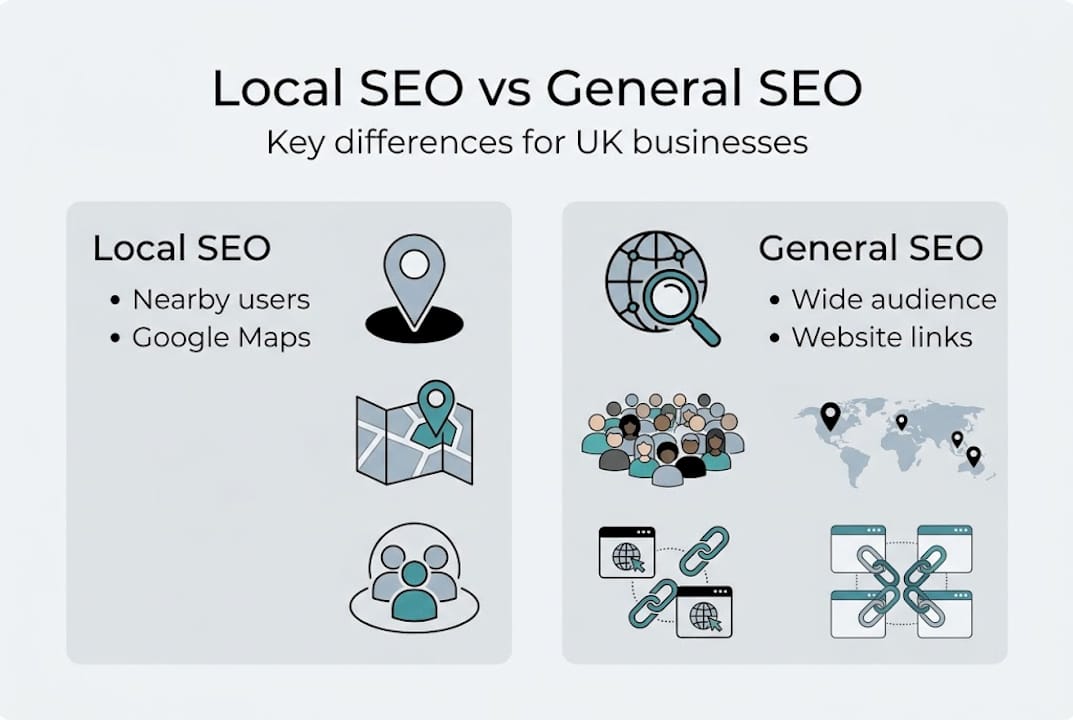
Here is a quick comparison to show how local SEO differs from general SEO:
| Factor | Local SEO | General SEO |
|---|---|---|
| Target audience | Nearby searchers | National or global audience |
| Primary goal | Foot traffic, calls, bookings | Website traffic, brand awareness |
| Key tool | Google Business Profile | On-page content and backlinks |
| Speed of results | Often faster | Typically slower |
| Competition level | Local businesses | National and global brands |
You can see examples of UK businesses using local SEO effectively to understand what results look like in practice.

Pro Tip: Set a monthly reminder to audit your citations across directories. A single inconsistency in your address or phone number can quietly undermine your rankings without you realising it.
Essential local SEO strategies for UK small businesses
28% of local searches result in a purchase within 24 hours. That figure alone should convince you that getting your local SEO right is worth the effort. Here are the strategies that make the biggest difference.
- Claim and complete your Google Business Profile. This is non-negotiable. Add every detail, upload genuine photos of your premises or work, and keep your hours accurate, especially around bank holidays.
- Ensure NAP consistency everywhere. Check your business name, address, and phone number on every platform where you appear. Even small differences, such as "St." versus "Street", can confuse Google.
- Encourage genuine customer reviews. Ask satisfied customers to leave a Google review after a job or visit. A steady flow of fresh reviews signals to Google that your business is active and trusted.
- Create locally optimised website content. Include your town or city name naturally in your page titles, headings, and body text. A page titled "Boiler repair in Sheffield" will outperform a generic "Boiler repair services" page every time.
- List your business in relevant UK directories. Focus on Yell, Checkatrade (for tradespeople), FreeIndex, and Bing Places. These are the platforms UK customers actually use.
- Use location-specific landing pages if you serve multiple areas. A separate page for each town you cover helps you rank in each location independently.
Our local SEO services are built around exactly these principles, tailored for UK businesses in competitive local markets. You can also find practical local SEO checklists to work through at your own pace.
Pro Tip: Respond to every review, positive or negative. A thoughtful reply to a critical review shows potential customers that you take your service seriously. It also signals engagement to Google, which can help your ranking.
Measuring local SEO success and next steps
You've learned the strategies. Now it's vital to recognise how to monitor your performance and plan for ongoing improvement. Without tracking, you won't know what's working or where to focus next.
The key metrics to watch are:
- Profile views — How many people saw your Google Business Profile in search or on Maps.
- Click-to-call actions — How many searchers tapped your phone number directly from the results.
- Direction requests — How many people asked Google Maps for directions to your business.
- Website visits from local search — Traffic arriving via Google Search Console tagged to local queries.
- Review count and average rating — Track both the volume and trend over time.
Here is an example of what progress can look like after consistent local SEO work:
| Metric | Before optimisation | After 3 months |
|---|---|---|
| Monthly profile views | 210 | 580 |
| Click-to-call actions | 14 | 41 |
| Direction requests | 8 | 29 |
| Website visits (local) | 95 | 260 |
| Average review rating | 3.8 | 4.6 |
Useful tools for UK businesses include Google Search Console, Google Business Profile Insights, BrightLocal (which is excellent for tracking local rankings), and Moz Local for citation management.
If your results plateau, revisit your citations for inconsistencies, check whether competitors have more reviews, and look at whether your website pages include enough locally relevant content. Local SEO drives immediate results when user intent is strong, so stagnation usually points to a specific gap rather than a broad failure.
Continuous improvement is the real secret. Update your business info seasonally, keep gathering reviews, and refresh your locally optimised pages with new content. You can find further guidance on how to measure local SEO success on our blog.
Why most local SEO advice misses the mark for UK businesses
Most local SEO guides are written with a US audience in mind. They reference Yelp heavily, ignore directories that UK customers actually trust, and overlook the fact that search habits here are shaped by different platforms and community behaviours.
The real benchmark for a UK small business isn't a national brand. It's the three or four competitors in your postcode who are already showing up in the Local Pack. That's the race you're actually running.
What we've seen working with UK trade and service businesses is that consistency and credibility outperform any clever technical trick. A plumber in Birmingham with 40 genuine Google reviews, a complete Business Profile, and a simple locally optimised website page will outrank a competitor with a flashy site but inconsistent NAP data almost every time.
Offline engagement feeds online results too. Sponsoring a local event, joining a business association, or being mentioned in a local news article generates the kind of community signals that reinforce your local authority online. SEO for UK businesses works best when your digital presence reflects genuine local roots, not just keyword placement.
Get expert support to grow your local presence
If you've found this guide useful but want someone to handle the heavy lifting, WebFlux works exclusively with UK small businesses to build and optimise their local presence.
From setting up and optimising your Google Business Profile to building a website that converts local visitors into enquiries, our local SEO services are practical, transparent, and built around your specific market. You can browse proven results for UK businesses to see what's possible. Whether you're starting from scratch or looking to improve what you already have, the WebFlux team offers a free consultation to assess your current position and map out a clear plan. No jargon, no vague promises. Just a straightforward conversation about what will actually work for your business.
Frequently asked questions
How is local SEO different from regular SEO?
Local SEO targets searchers in your geographic area and helps your business appear for searches with local intent, such as "near me" or city-specific queries. 46% of Google searches carry this kind of local intent, making it a significant opportunity for small businesses.
How quickly can local SEO bring in new enquiries?
76% of people who search nearby visit a business within 24 hours, and 28% make a purchase in that same window, making local SEO one of the fastest routes to new customers.
Is Google Business Profile really necessary for local SEO?
Yes, it is essential. The Local Pack gets 44% of clicks on local searches, and only businesses with optimised Google Business Profiles appear there consistently.
What are the main ranking factors for local SEO?
Google weighs relevance, distance, and prominence, but accurate business information and customer reviews carry the most practical weight. Top businesses average 86 citations across directories, which builds the prominence Google looks for.
Can I do local SEO myself or do I need an expert?
You can absolutely start on your own by claiming your Google Business Profile and collecting reviews, but an experienced agency can accelerate your results and resolve technical issues that are easy to miss.